A foiler just showed up in your lineup. If you don't like it, here's what to do about it.
Why he's out there, and how to get him to give you room without wrecking anybody's session.
By Kevin Dickinson · September 2026 · Founder, Endless Waves
This one is written for surfers. If you foil, read the other version instead, because it asks a lot more of you than this one asks of them.
I prone foil (paddling into waves like a regular surfer, on a board with a hydrofoil bolted underneath it and no motor of any kind). I've been yelled at plenty and I understand why. I'm the unfamiliar thing in the water and I'm on equipment that looks like it could hurt somebody.
But most of what gets shouted at me is based on stuff that isn't true, and the way it's delivered almost guarantees I can't give you what you want even when I'd be happy to. So here's the short version of both.
Three different things get called foiling
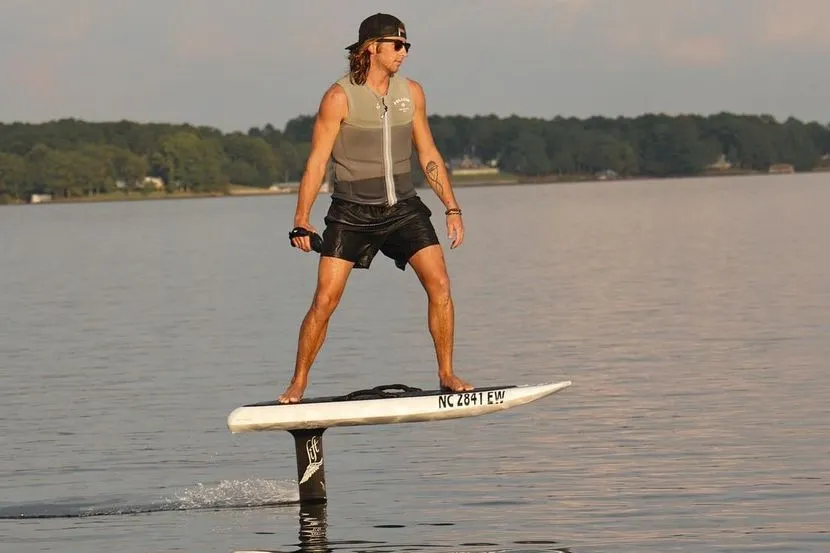
eFoil. Big heavy board with an electric motor and propeller underwater, a battery sealed inside it, and a wireless throttle in the rider's hand. Legally a vessel.For what it's worth, most eFoil riders stay out of the waves entirely and ride flat water, which is what the thing is built for. If you've got one in your lineup, that's unusual.
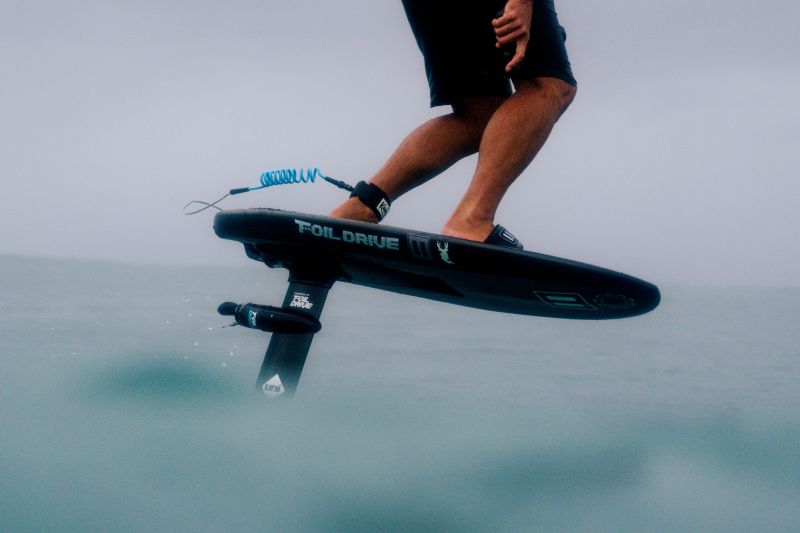
Foil assist, or Foil Drive. Smaller motor doing the same job, usually just enough to get the rider up and going before he rides the wave normally. The giveaway is a small propeller mounted just below the board, and the sound. When he kicks the motor on there's a buzz under him that a surf foil never makes. Otherwise it looks a lot like a normal foil board, which is exactly why these two keep getting mixed up.It's motorized, so it's a vessel under the same rules as an eFoil, and it shouldn't be sitting in a crowded lineup either.
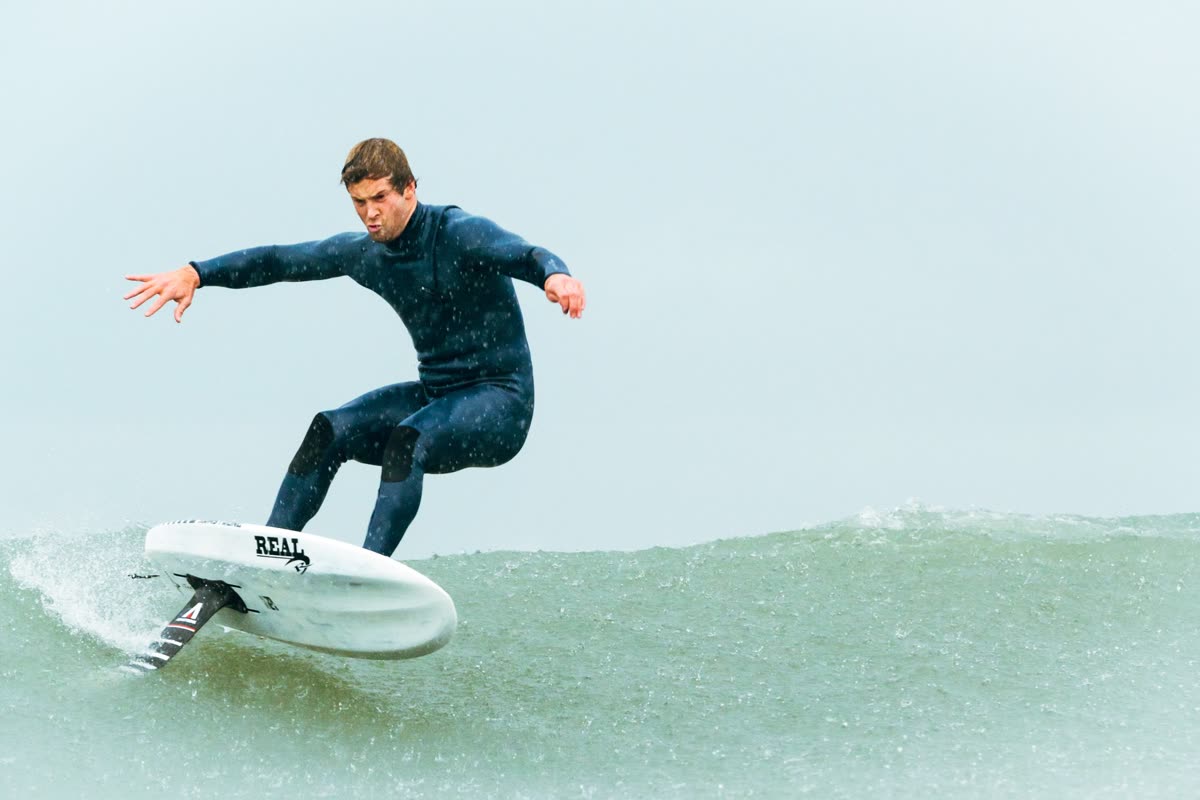
Surf foil. No motor, no battery, no propeller, no remote. He paddles in exactly like a regular surfer, and every bit of the speed after that comes out of the ocean and his legs.It's also the hardest thing I've ever done in the water, and I'm including surfing in that. You still have to do everything a surfer does. Read the wave, sit in the right spot, catch it, get to your feet. Then on top of all of it you're balancing on a wing you can't see, at a depth you can't measure, on a board that throws you the second you get it slightly wrong. A motor covers for a lot of mistakes. There isn't one here.Which is why the guy on the surf foil is usually the most experienced waterman of the three by a long way, and that's worth knowing when you're working out how nervous to be about him.
From a hundred feet away there are two things to look for. Is he holding something? A remote in his hand means motorized. Did he get up without a wave? Standing up and riding away across flat water means motorized. No remote, and he had to paddle into something to get going, and it's a surf foil.
All three have a hydrofoil underneath, which is the only thing they have in common and the only part you can see from where you're sitting. If the guy near you has no motor on his board, none of the eFoil rules or complaints apply to him, and he probably gets lectured about them constantly.
And here's the part that should actually reassure you. Putting a motor on it makes it a vessel. Vessels are built for open water, and in most surf zones they aren't allowed anywhere near you. So the version of this you're picturing, the one with a propeller on it doing twenty knots through the lineup, is already not permitted to be there.
I'd honestly use a motor if I could. It would mean I never need your wave.
I can't, so I'm on the one that has to paddle into a breaking wave like everybody else out here. That isn't me picking your lineup over the open ocean. It's the only option I have.
So work out which one you're looking at before you decide how to feel about it.
If it has a motor on it and it's running through the surf zone, you have a real complaint and this is not the article for it. That one is a rules problem, not a culture problem. Take it to the lifeguards and they can actually do something, because motorized craft in the surf zone is a line somebody drew on purpose.
If there's no motor on it, the rest of this is the part that'll help you.
He still has to get up
The single most common thing said to me is some version of "you have the whole ocean, go ride out there."
I get why it seems obvious. You've watched a foiler ride swell that never broke and cross water you can't do anything with, so it looks like the board works anywhere.
It doesn't work anywhere. There's no motor on it.
He has to catch something. A prone foiler paddles into a wave, the same wave you're paddling for, and uses it to build enough speed to get the foil flying. It doesn't have to be the best wave out there, but it has to have some push in it. Out in the flat middle of the ocean there is nothing to catch, and he'd be lying on a board in deep water doing absolutely nothing.
Once he's up, yes, he can go places you can't. He can pump, cross flat sections and link into swell nobody else can use. But the getting up part happens exactly where your sport happens, and there is no version of prone foiling that avoids that.
There are people riding open water on foils. That's downwind foiling, and it's a different sport. Different board, different foil, usually a paddle, and the whole point is running wind swell in a straight line for miles. Telling a prone foiler to go do that instead is like telling you to go skimboard. Same beach, same water, completely different sport.
Here's the useful part for you. He needs a couple of seconds of broken wave and after that he makes his own speed, so he doesn't need the critical section the way you do. The shoulder works fine. A crumbly inside reform nobody in the lineup would paddle for is enough. That means there is almost always a version of this where he gets what he needs and you never lose a wave, and it's worth knowing that before the conversation starts.
The part where you're right
A foil can cut somebody. That's real and no honest foiler will tell you otherwise.
But the comparison you're making in your head is probably wrong, and I have a slightly unfair source on this. My wife is an emergency room nurse in Southern California. She sees surfboard lacerations constantly. Fin cuts are routine, week in and week out, to the point where they're unremarkable.
She has never once had a foil injury come through her ER.
That's one emergency room and it isn't a study, and foil injuries obviously do happen. But it's the exact opposite of the impression most people walk around with, and the reason for that gap is worth understanding before you decide how you feel about the guy near you.
Two other things are worth knowing. Almost every foil injury you've seen a clip of is self inflicted, usually somebody learning, often alone. And the danger zone around a falling foiler is real but small. A foil that looks terrifying from forty feet away is forty feet away.
So if a foiler is riding forty or fifty feet off your shoulder and kicking out away from people, he isn't a threat to you in any practical sense. If he's dropping in on the peak, pumping back through the middle of the pack, or losing his board near your kid, that's a real problem and you're entitled to say so.
Why it looks so much worse than it is
Social media pays for engagement, and nothing engages like anger and shock. A clip of a foil injury gets shared, reposted and argued about in the comments for a week. A clip of somebody having a nice session on a foil gets nothing. Nobody fights about that.
So the algorithm does what it was built to do. It works out that foil injury content performs and it pushes more of it at whoever reacts hardest, which is surfers. Why would it ever show you a foiler having a great time? You don't foil. You're not going to comment.
Now think about the other side of that. A fin cut is so ordinary that nobody films it, nobody posts it, and it never travels. The thing that actually fills my wife's shift is invisible, and the thing she's never seen is all over your phone.
By the time you run into a foiler in person, you might have watched a dozen foil accidents and zero ordinary foil sessions. Every foil you've ever seen was the worst one, pulled off every beach on earth and stacked up back to back.
That's not an opinion you arrived at. That's a feed.
And it doesn't stay on the screen. You show up already loaded, and the guy on the foil is the first one you've seen in person. He isn't being judged on his session. He's being judged against a highlight reel of the worst crashes on the internet.
For what it's worth, foilers feed the same machine. The guy posting his own worst ten seconds because that's the clip that performs is handing you the evidence against himself, and most of us don't think about that when we hit share.
What you should expect from him
It's worth knowing what a foiler who's behaving properly actually looks like, so you can tell the difference between one who's being reasonable and one who isn't.
He should be sitting wide and staying off the peak. He doesn't need the critical section, so there's no reason for him to be sitting on it.
He should be taking the waves nobody else wants, including whitewater on the inside.
He should be leaving enough room that his leash and his board couldn't reach you, which works out around 15 feet. If he has that much and he falls, none of his gear is getting anywhere near you.
He shouldn't be pumping back through the middle of the pack when he could go around it. Worth knowing, though, that a guy who can pump out and link another wave at all is well past the beginner stage. The ones who can't pump yet are the ones still falling around on the inside.
He should be on a leash, same as you.
That's a fair standard and most decent foilers already hold themselves to it. Worth remembering that this is usually the most experienced person in the water, and he generally knows exactly where his board is going to end up. If the guy near you is doing all of that, he's not the problem. If he isn't, the next section is how you get him to change it.
If you want him to give you room, this is how you get it
This is the part I actually care about, and it has nothing to do with equipment.
No matter how annoyed you are, screaming at somebody across the water at the top of your lungs is not going to get you the result you want. It has never once worked on me and I've been on the receiving end of it a lot.
Here's what actually happens when you do it. I stop hearing the content and start managing the situation. Everybody else in the lineup turns around and now it's a scene. Even if what you wanted was completely reasonable, the way you asked has made it almost impossible for me to just say yes without looking like I got run off.
Paddle over and say it like a person instead.
"Hey, you're making me nervous when you come through here. Can you give us more space?" That's it. That works on me every single time, and it works on almost every foiler I know, because it's cheap for us to say yes to. We don't need your peak. We'll move.
I'm not asking you to like foiling or to pretend you're glad we're out there. I'm telling you that the calm version of the request gets you the space and the loud version gets you an argument, a ruined session for both of us, and a foiler who is now less inclined to accommodate the next person who asks.
It takes a bit of emotional maturity to do it that way when you're already worked up. I know, because it takes the same thing from me when somebody is screaming in my face and I have to answer calmly. I don't always manage it either.
Bottom line
No motor? Then he has to catch a breaking wave, same as you.
Want him to move? Ask him calmly. He'll almost always say yes.
Yelling across the lineup? Gets you an argument and nothing else.
We're all out there for the same reason, and none of us has ever driven to the beach hoping for a confrontation. Nobody wins those. The session just ends up worse for everyone in the water.
If you want the long version of what foilers owe you, I wrote that one too, and it's considerably harder on us than this one is on you. Read it here.