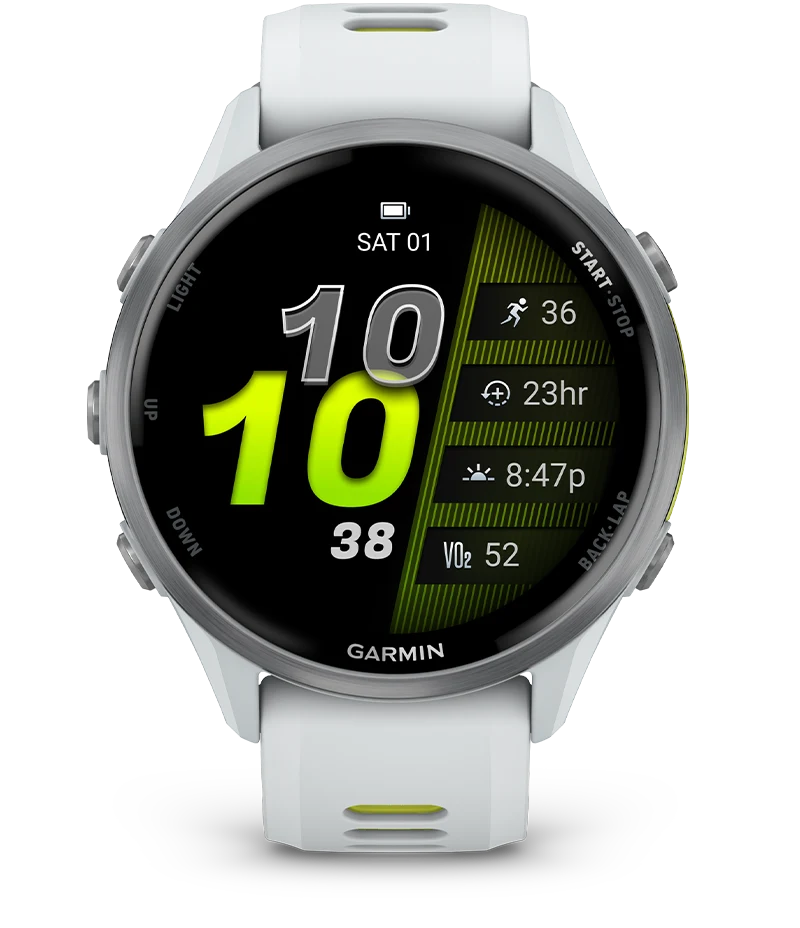
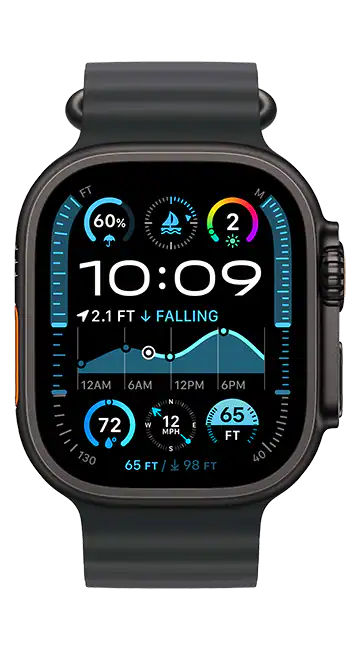
I built Endless Waves, a foil surfing tracker for Apple Watch. A few months ago I added Garmin support because enough people asked. I'll keep supporting it. But after going through the process myself, I want to be honest with anyone who surfs, kiteboards, wing foils, or does any niche water sport and is wondering whether a Garmin watch will get them the experience they're looking for.
Short answer: probably not.
Sure, it has great battery life. But that's not the whole story.
Garmin is built around running and cycling
This isn't a criticism of the hardware. Garmin watches are genuinely excellent. The GPS is accurate, the battery lasts for days, and if you run or bike, the built-in training features are the best in the business. Training readiness, recovery time, VO2 max estimates. Runners and cyclists are well served.
The problem is everything outside of that. If your sport isn't running or cycling, Garmin basically expects someone else to build what you need. That someone else is third-party developers, and the tools Garmin gives those developers are, to put it charitably, limited.
The app store that isn't really an app store
Garmin has something called the Connect IQ store. On paper it's their version of the App Store. In practice it's mostly watch faces and basic data overlays, not real apps. What that means for you as a user: if you want session history, leaderboards, friend tracking, or anything interactive, the odds that someone built it for your sport are low. And even if they did, the experience is going to be a fraction of what you'd get on Apple Watch.
Garmin users in niche sports are largely stuck with whatever Garmin chose to build natively into the watch. If your sport isn't on that list, you're out of luck.
I've seen this firsthand building Endless Waves. The Garmin version of the app works, but it's stripped down compared to the Apple Watch version. Not because I wanted it that way. Because the platform has hard limits on what's possible, and working around them takes enormous effort for results that still fall short.
My own watch crashed my own app
I tested the Garmin version of Endless Waves on my personal Garmin during a foil session. It crashed halfway through. A user messaged me the same week saying his sessions were working fine at first, then started failing after longer rides.
The reason both happened comes down to Garmin's watches having very different amounts of processing power depending on the model. A budget Garmin and a $700 Garmin handle third-party apps completely differently, and the cheaper models struggle badly with anything data-intensive. That inconsistency makes it hard to build something that works reliably across the whole lineup.
Apple Watch doesn't have this problem. When I build something for Apple Watch, it works.
Same wrist, half the runs
I recently wore both an Apple Watch and a Garmin on the same wrist during the same session. Both watches were running Endless Waves with identical detection algorithms — same speed thresholds, same timing windows, same logic. The only difference was the hardware.
Apple Watch detected 21 runs. Garmin detected 10.
Same session. Same wrist. Same software. Half the data.
The long runs matched almost perfectly — the 3–5 minute rides lined up within seconds between the two watches. But the shorter runs, the quick catches and brief connections that make up a big part of a typical session, the Garmin just missed them entirely.
The root cause is a combination of lower effective sampling resolution and slower speed convergence on Garmin. Apple Watch exposes location and velocity updates to apps several times per second, and the speed values settle quickly because they're fused with motion sensor data. Garmin's Connect IQ platform — what every third-party app is built on — exposes location updates roughly once per second, with more smoothing and more lag in the speed estimate before a real-world acceleration shows up in the data.
For long rides, none of this matters. A 3–5 minute ride clears any threshold by a wide margin on either watch. But a short run is different. The algorithm needs to see you above a speed threshold for 1.5 consecutive seconds before it counts as a wave. On Apple Watch, that's half a dozen data points converging quickly. On Garmin, that's 1–2 points, arriving late, after the speed estimate has had time to catch up. Catch a short 5–10 second run, and the window closes before the numbers ever confirm what actually happened.
This isn't fully solvable in software without trading off accuracy. Garmin's own built-in activities appear to have access to faster, less smoothed sensor data internally — but that data isn't exposed to third-party developers through Connect IQ. So the native running app gets the full picture, and every third-party app — including ours — is working with less.
The 11-minute blind spot
Worse than the sampling issue: Garmin's GPS just stops sometimes. On the same session (wearing both watches), Apple Watch's longest gap was 70 seconds. Garmin had an 11-minute stretch with zero GPS data.
I was foiling the whole time. Apple Watch saw it. Garmin wasn't looking. Connect IQ doesn't give apps a way to detect it or force GPS back on.
The features we actually want to build
We have a strong roadmap for Endless Waves, and almost none of it is possible on Garmin. Not because the ideas are complicated. Because the platform simply doesn't support the kind of connectivity, processing power, and real-time capabilities that modern app features require.
On Apple Watch, we can build interactive, data-rich features that talk to your phone and respond in real time. On Garmin, that category of feature is largely off the table. It's not a matter of engineering harder. The platform has a hard ceiling.
That's the real gap. It's not just about what exists today. It's about what's possible tomorrow. And on Garmin, tomorrow looks a lot like today.
Who should actually buy a Garmin
If you run, bike, swim laps, or do triathlons, Garmin is the right call. The native features are best-in-class and the battery life alone makes it worth it for endurance athletes. You won't need third-party apps because Garmin already built what you need.
But if you foil surf, kiteboard, wingfoil, or do any sport where you need a dedicated tracking app with real features, the honest truth is that Apple Watch is where that software exists and where it actually works. The community of developers building for niche sports on Apple Watch is bigger, the tools are better, and the results show.
Bottom line
Running or cycling? Get the Garmin.
Niche water or action sport? Get the Apple Watch.
Want the best of both? That watch doesn't exist yet.
Garmin built incredible hardware. They just haven't built the ecosystem around it that niche athletes actually need. Until they do, the apps you want will keep living on Apple Watch first, if they exist on Garmin at all.
Kevin Dickinson is the founder of Endless Waves, a foil surfing session tracker for Apple Watch and iPhone. Available on the App Store.




 Join Android Waitlist